
What Is a Crypto Wallet? Keys, Types and Risks Explained
A crypto wallet stores no coins, only keys. That may sound like a detail, yet it touches the very core of what digital ownership means. Anyone who holds crypto in fact holds control over a private key with which transactions on the blockchain are signed. The coins themselves are recorded on the network; the wallet merely proves that you are entitled to dispose of them.
For a substantial investor, the relevant question therefore shifts. What is decisive is not where the coins are held, but who controls the keys. It is precisely in that key management that the real risk resides.
Public and private keys
A wallet contains a key pair. The public key functions as an address: it is where you receive crypto, comparable to an account number that you may safely share. The private key does the opposite. It is what you use to sign transactions. Whoever holds that key controls the balance. Lose the private key and you lose access. Should it fall into the wrong hands, the balance is gone. Transactions on the blockchain are irreversible, so a mistake cannot be undone.
Hot and cold storage
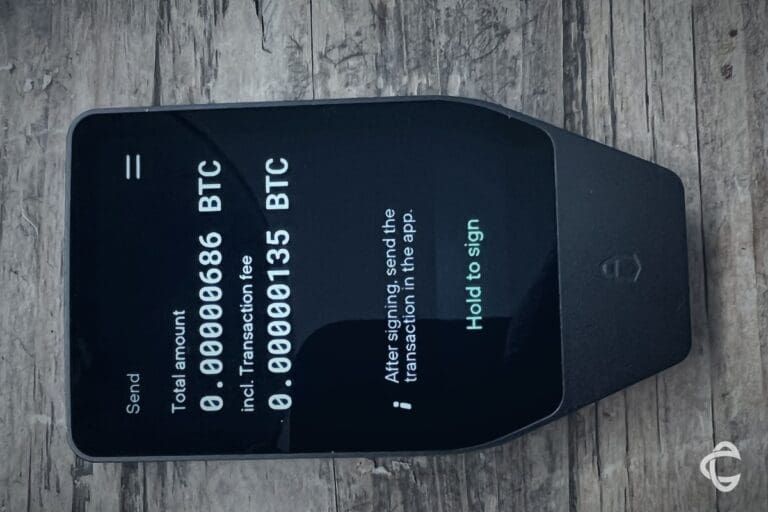
Wallets come in various forms. A hot wallet is kept online, through an app or an exchange, and is easy to use. That same connection makes it more vulnerable to theft. A hardware wallet stores the keys offline on a separate device, which limits exposure to hacks. Whether it concerns a Bitcoin wallet or a wallet for other tokens, the principle remains the same. Almost every wallet comes with a seed phrase: a recovery phrase of twelve or twenty-four words from which the keys can be derived anew. Whoever knows that phrase controls the entire balance. Keeping it safe is therefore just as important as the wallet itself.
Custodial or self-custody
The most important choice concerns who controls the keys. With custodial storage, a third party such as an exchange holds the keys on your behalf. That takes the burden off your hands, but it makes you dependent on the security and the soundness of that party. Opt for self-custody and you keep the keys entirely in your own hands. Control is then maximal, yet so is responsibility. A lost seed phrase or a successful scam leaves no recourse for recovery. For those who would rather not carry that responsibility themselves, professional custody forms a serious alternative. It is not without reason that the AFM warns of irreversible loss, theft and fraud.
Key management as a process
At Callisto Capital, key management sits with professional custodians and is set down in procedures. A participant therefore has no recovery phrase to keep and no hardware that can go missing.
Callisto Capital is a Dutch fund for joint account; its manager is registered with the AFM under the AIFMD-light regime and is not subject to ongoing supervision. Participation is open from an investment of 100,000 euro. This article is for information only and does not constitute investment advice.
Newsletter
The monthly market update in your inbox