
What Is Bitcoin? Digital Scarcity Explained Without the Hype
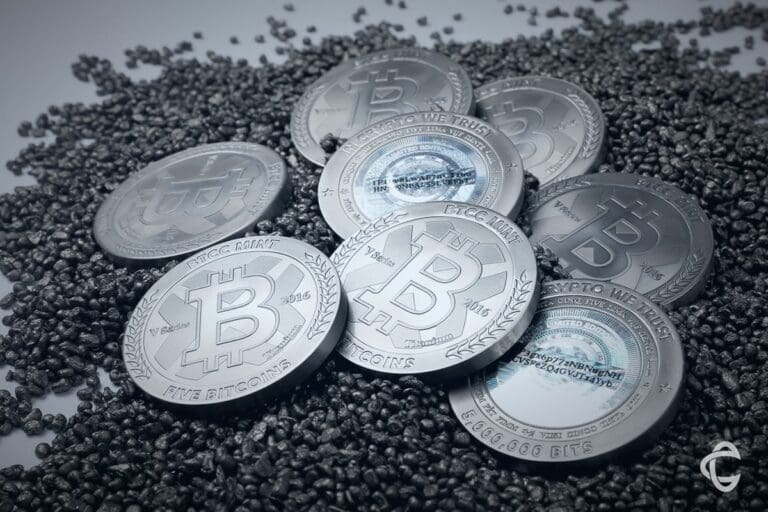
Bitcoin is the first and by far the largest cryptocurrency: a digital asset that operates outside banks and governments. Holding Bitcoin does not give you a claim on an institution, but a position on a public, global ledger that no single party controls.
At the heart of the story is scarcity. There will only ever be a maximum of roughly 21 million Bitcoin, a limit set in the software itself. It is precisely this fixed supply that places Bitcoin in a category of its own within the wider world of crypto.
Money without a central party
The idea emerged in 2008, when a concise whitepaper appeared under the name Satoshi Nakamoto; the following year the network went live. Two parties can settle directly with one another, without a bank in between. The record is kept not by a central institution but by a network of thousands of computers worldwide. Because no single party owns the network, none can unilaterally shut it down or expand the supply.
A fixed supply and the halving
New Bitcoin enters circulation solely as a reward for adding a new block to the ledger, on average once every ten minutes. That reward halves roughly every four years, a moment known as the halving. Where the network initially paid out fifty Bitcoin per block, successive halvings have reduced this to a few coins, until issuance is expected to reach zero around 2140. The pace at which new supply arrives can therefore be calculated precisely in advance; such predictability is rare for a monetary system.
Why Bitcoin forms a category of its own
The crypto market now counts thousands of coins, but Bitcoin stands apart on three points: it is the oldest, the largest by market value and the most liquid, with a consistently deep market of buyers and sellers. Where many other coins revolve around a specific application, Bitcoin stays close to a single function: a scarce, transferable digital asset. A growing number of professional parties therefore treat it as a distinct asset class, alongside equities and bonds.
The risks
An honest explanation also names the limits. Bitcoin is not legal tender in the Netherlands, and its price can rise or fall by tens of percent in a short time. Holding it, moreover, yields no interest or dividend in itself: any return must come entirely from price movement. That gives Bitcoin a risk profile of its own, one that calls for knowledge and discipline.
Bitcoin as a component, not a goal
At Callisto Capital, Bitcoin is one of the building blocks of the portfolio, not an end in itself. How much of it the portfolio holds at any moment follows from the rules of the strategy, not from a view on the coin.
Callisto Capital is a Dutch fund for joint account; its manager is registered with the AFM under the AIFMD-light regime and is not subject to ongoing supervision. Participation is open from an investment of 100,000 euro. This article is for information only and does not constitute investment advice.
Newsletter
The monthly market update in your inbox