
Crypto News: Market Update September 2026
September became the month of rate hikes, just as Fed Chair Kevin Warsh had signalled at Jackson Hole in August. The European Central Bank raised rates first, and six days later the Federal Reserve followed with its first rate hike since July 2023. In between, the Clarity Act failed in the US Senate, and by late September oil was back above $107 a barrel. Bitcoin dropped to just above $76,000 mid-month, yet stood around $84,000 again by the end of September.
10 September: ECB Raises Rates for the Second Time This Year
The European Central Bank raised its three key interest rates by 25 basis points. The deposit facility rate, which is what banks earn on the money they hold at the ECB, went from 2.25% to 2.50%. The main refinancing rate and the marginal lending rate rose to 2.65% and 2.90%, effective 16 September. It was the second hike of 2026, following June’s. Once again the ECB pointed to the conflict in the Middle East, which is expected to keep inflation well above its 2% target for an extended period. Euro area inflation came in at 3.3% in August.
The new staff projections show why the ECB was no longer willing to wait. It now expects inflation to average 3.0% in 2026, 2.5% in 2027 and only 2.1% in 2028, with the last two years revised upwards. The ECB did not commit to a next step: rates will be set meeting by meeting. Bitcoin barely moved and held around $78,000, as the hike had been widely expected. (Source: ECB)
15 September: Clarity Act Fails in the Senate
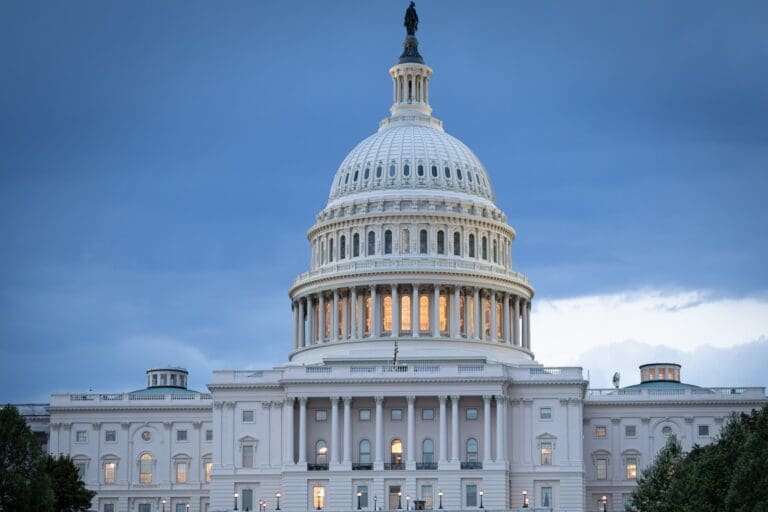
The crypto industry’s top legislative goal fell short. In a procedural vote in the US Senate, the Clarity Act drew 49 votes in favour and 50 against, with 60 needed to open debate. After more than 600 pages of compromise text, the bill broke down over ethics provisions meant to stop senior government officials from keeping crypto business interests. Senator Elissa Slotkin, a Michigan Democrat, voted no because those provisions were “simply too thin”, pointing to crypto earnings by President Trump, his children and his Cabinet.
Markets reacted the next morning. Bitcoin lost nearly 3% to just above $76,000, ether fell almost 5% to around $2,410 and XRP dropped about 10%. Listed crypto companies were hit harder, with Coinbase and Circle both down around 9%. With the law off the table for now, attention shifts to the regulators themselves. (Source: CoinDesk)
16 September: Fed Hikes for the First Time Since 2023
A day later it was the Federal Reserve’s turn. The rate-setting committee voted 12-0 for a quarter-point increase, lifting the federal funds rate to 3.75-4.00%. It was the first hike since July 2023. Warsh called inflation “too high … for too long” and said the Fed must be confident that underlying inflation is moving to its objective clearly and at sufficient speed. He cited a strong economy, a strong labour market and tensions in the Middle East. The 4 September jobs report had counted 162,000 new jobs in August, against expectations of 53,000.
Individual officials’ projections point to more. Sixteen of the eighteen participants expect at least one more hike this year; four of them see two as possible. The Fed also nudged up its inflation forecast for 2026: the PCE price index, the Fed’s own preferred inflation gauge, is now seen at 3.7% with the core measure at 3.4%, and the 2% target is not expected to be reached until 2029. Because markets had priced in a better than 90% chance of the move, there was no shock. The S&P 500 rose after the decision and Treasury yields fell. (Source: CNBC)
17 September: SEC Opens the Door to Tokenized Securities
Where Congress failed to act, the regulator stepped in. The SEC unveiled its long-awaited Innovation Exemption, a conditional exemption running for five years. Platforms that register for it may use automated market makers and liquidity pools to trade tokenized versions of US-listed securities, without being classed as an exchange. The SEC did draw a firm line. Only tokens that represent real ownership of the underlying security qualify, carrying the same rights to dividends and the same voting rights; synthetic derivatives are excluded.
SEC Chairman Paul Atkins himself described the measure as temporary, saying it must be followed by durable rulemaking. A platform that wants to tokenize another company’s securities has to give that company thirty days’ notice and the opportunity to object. The SEC had held the initiative back while the Senate was still working on the Clarity Act; with Tuesday’s failed vote, that constraint fell away. (Source: CoinDesk)
28 September: Oil Tops $107 as Trump Rejects Iranian Proposal
On Friday 25 September, at the United Nations General Assembly, Tehran offered to reopen the Strait of Hormuz within a week and return to negotiations on its nuclear programme. The offer came with conditions: Washington would have to release frozen Iranian funds, lift sanctions and end its naval blockade of Iranian ports. President Trump called the proposal unacceptable the following day.
The oil market responded on Monday 28 September. Brent crude, the international benchmark, rose more than 3% in Asian trading to nearly $108 a barrel and stood at $107.35 shortly before 08:00 GMT. Before the war began in late February, roughly a fifth of global oil supply flowed through the Strait of Hormuz. According to MarineTraffic, vessels made 132 transits in the whole week of 21 to 27 September; before the war, about 130 crossed on a single day. That keeps the energy component of inflation high, precisely what both the Fed and the ECB cited for their hikes. (Source: Al Jazeera)
Conclusion
In September, central banks began factoring the energy shock into their rate decisions. The ECB raised rates to 2.50%, the Fed to 3.75-4.00%, and both left the door open to more. The driver is the same on both sides of the Atlantic: an oil price that stays high as long as shipping through the Strait of Hormuz remains disrupted.
For crypto, the month had two faces. The legislative route stalled, but the SEC took the initiative and by the end of September bitcoin was back around $84,000. US spot bitcoin ETFs recorded around $2.4 billion in net inflows in the week to 25 September, their largest weekly inflow of 2026, turning net flows for the year positive again. Heading into October 2026, the focus is on the oil price, on whether the Fed hikes again at its next meeting, and on the US midterm elections of 3 November.